


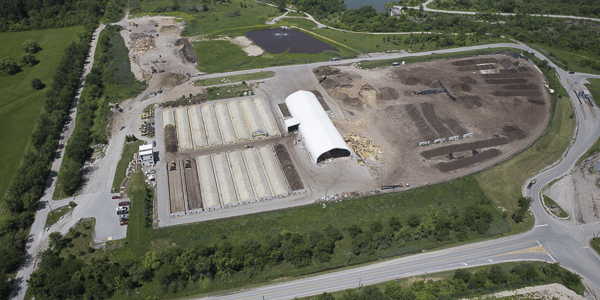
Speed Gets Attention. Consistency Keeps the Facility Running.
Processing speed is one of the easiest composting metrics to sell. It sounds simple, measurable, and valuable. If one system says it can move material faster than another, the decision can feel obvious.
But composting is not a race to empty the active pile. It is a controlled biological process that must produce stable, mature, compliant, and marketable compost under real-world conditions. The systems that create the most long-term value are not always the ones with the shortest advertised processing window. They are the ones that perform consistently when feedstocks change, weather shifts, staffing gets tight, and regulators expect proof.
That is where Sustainable Generation® fits into the conversation. SG Advanced Composting™ Technology with GORE® Cover is designed around repeatable, controlled performance, and doesn’t only depend on best-case processing claims. Speed only matters when the outcome is reliable. Consistency is what protects permits, neighbors, operators, budgets, and the final compost product.
The Problem with Selling Speed First
Speed is attractive because it compresses a complicated operating decision into one clean number.
A shorter processing time suggests higher throughput, less material on the pad, and more capacity inside the same footprint. For owners and municipalities managing food waste, yard trimmings, biosolids, digestate, manures, and other organic residuals, that promise carries weight.
The problem is that speed can be misleading when it is separated from the actual endpoint. A pile can leave the active composting phase quickly and still require extended curing. It can meet a temperature target and still have odor potential. It can look finished but remain biologically active. It can move through equipment without becoming a stable product that customers can use with confidence.
That is the gap many composting projects miss. The question should not be, “How fast can this system move material?” The better question is, “How reliably can this system produce finished compost that meets the facility’s operational, regulatory, and market requirements?”
Composting Is Biology, Not Just Material Handling
Composting is a managed aerobic biological process. Microorganisms do the work, and they need the right balance of oxygen, moisture, temperature, porosity, nutrient mix, and time. Every variable affects the others.
More aeration can improve oxygen, but it can also remove heat and dry the pile. More moisture can support microbial activity, but too much moisture limits airflow. Smaller particles increase surface area, but too many fines can compact the pile and restrict oxygen movement. Higher temperatures can accelerate activity, but too much heat can slow or damage the microbial community.
Composting can be accelerated, but it cannot be rushed past the limits of biology. The factors that support microbial activity need to be properly managed, including feedstock structure, porosity, moisture, oxygen, temperature, carbon-to-nitrogen balance, and available energy. That is where SG Advanced Composting™ Technology with GORE® Cover becomes critical. Rather than chasing speed as a standalone metric, the system is designed to maintain the conditions that allow the biology to work efficiently and reliably. The GORE® Cover helps retain moisture, support controlled gas exchange, and contain odors during the active composting phase, while the aeration and monitoring tools help operators maintain peak operating ranges. When you have the right technology in place, faster processing is not achieved by cutting corners. It is earned through better process control.
A fast system that does not manage those relationships consistently may simply move unfinished work to the next stage. That work still has to happen somewhere, often through longer curing, added odor management, extra testing, delayed screening, or lower product quality. Every one of those outcomes reduces facility efficiency and increases operating cost.
“Processed” Does Not Always Mean “Finished”
Composting technology companies often advertise how quickly material is “processed,” but that term can mean very different things depending on the system and the stage being measured.
It might mean the material completed the active phase. It might mean it reached a temperature threshold. It might mean it moved through a machine or came out of a covered pile. But those milestones do not always mean the compost is finished.
Finished compost needs to be stable enough that it is not rapidly decomposing. It needs to be mature enough that it will not create problems in its intended use. It needs to be handled, stored, screened, transported, and applied without avoidable odor or quality concerns.
A system that shortens the active phase but produces inconsistent stability can create downstream cost. Material may need more curing time. Operators may need to rework piles. Compost may need more testing before sale. Odor risk may increase during storage or transfer. Compliance risk may also increase if material is moved before the process has done its job.
The active phase may look faster, but the entire facility may not be. The strongest operations are designed around the full path from inbound material to market-ready product. They do not optimize one stage at the expense of everything that follows.
Throughput Depends on Reliability
Processing speed is often tied to throughput, and for good reason. Facilities need capacity. They need to know how much material they can accept, how long it will stay on site, and when finished compost can move out. Those assumptions drive budgets, staffing plans, equipment needs, and facility design.
But real throughput is not determined by the shortest possible cycle time. It is determined by dependable cycle time.
A system that claims a short active phase but regularly stretches under wet food waste, cold weather, or inconsistent feedstock is not truly operating at that advertised timeline. A system that finishes quickly but leaves material needing corrective curing has not solved the capacity problem. It has moved the bottleneck to another area of the facility.
Reliable throughput depends on predictability. When cycle times are consistent, operators can plan pad space, loader hours, curing windows, screening schedules, outbound sales, and staffing with confidence. Material moves through the site in a controlled rhythm. Inventory does not build up unexpectedly. Expansion planning becomes more realistic.
When cycle times vary widely, the average matters less. The bad weeks become the planning reality, and the best-case scenarios become exceptions. This is where consistency becomes a financial advantage. Predictability reduces surprises, and surprises are expensive.
Odor Is Often a Symptom of Incomplete Control
Odor is one of the clearest signs that the composting process is not operating within the correct range.
That does not mean every odor event is the result of poor management. Composting handles materials with real odor potential. But persistent odor often points to issues with oxygen, moisture, feedstock balance, or process timing.
When oxygen becomes limited, anaerobic pockets can form. When moisture is too high, airflow slows. When high-nitrogen materials are not properly blended and controlled, odor potential increases. When material moves too quickly through active treatment, unfinished biology can create problems later.
This is why odor control should not be treated only as a downstream issue. Biofilters, caps, and other mitigation tools can help, but they do not replace process control. The stronger strategy is to reduce odor risk at the source by keeping the pile in the right biological range throughout active composting.
That is one of the core advantages of SG Advanced Composting™ Technology with GORE® Cover. The cover is not a tarp or a simple weather barrier. It is a purpose-engineered part of the composting system that helps contain odors, moisture, dust, and bioaerosols during the active phase while supporting controlled gas exchange.
Consistency protects more than the process. It protects the neighbor relationship. Once odor complaints begin, every future issue becomes more visible. Regulators may increase scrutiny. Expansion may become harder. Community trust becomes harder to earn back.
Product Quality Is the Real Test
A composting facility ultimately produces a product. That product must perform.
For municipalities, haulers, composters, farmers, landscapers, soil blenders, and public works teams, compost value depends on consistency. Customers need confidence in maturity, stability, moisture, particle size, and handling characteristics.
A system that produces uneven material creates friction in the market. Some batches may be ready while others need more curing. Some material may screen well while some clumps or holds too much moisture. Some loads may meet expectations while others raise concerns.
That variability makes compost harder to sell, harder to specify, and harder to trust. A consistent process supports a consistent product. It helps operators build stronger markets because buyers know what to expect.
If the end product is not dependable, the facility’s economics become less dependable too.
Real-World Conditions Matter More Than Ideal Conditions
Most composting systems can perform well in ideal conditions. The harder question is what happens when conditions change.
What happens when the feedstock gets wetter than expected? What happens when food waste increases? What happens during fall leaf season, spring rain, summer heat, or winter freeze-thaw cycles? What happens when staffing is short, when a loader goes down, or when a route brings in a contaminated load?
Those are not edge cases. Those are normal operating conditions.
A technology that depends on perfect inputs and perfect operations is fragile. It may look strong during a demonstration but struggle under the daily pressure of a real facility.
A consistent system is more valuable because it is built for variation. SG systems are designed for real operating environments where feedstocks change, moisture shifts, weather matters, and staffing is not always perfect. The combination of GORE® Cover, controlled aeration, and remote monitoring helps operators maintain process control when conditions are less than ideal.
That is the standard buyers should use when evaluating technology. Not: what is the best-case processing time? But: what happens when conditions are not ideal?
What Operators Should Ask
When evaluating composting technology, owners and operators should ask questions that reveal the full operating reality.
- What does “finished” mean in the claimed processing time?
- Is the number tied to pathogen reduction, active processing, stability, maturity, curing, or market-ready compost?
- How much curing is assumed after the active phase?
- How does the system perform with wetter feedstocks or higher food waste content?
- What happens when moisture or temperature moves outside the target range?
- Most importantly: How repeatable are the results?
A single successful batch proves possibility. Repeated success proves reliability. Inconsistent systems require more intervention: more turning, more rewetting, more monitoring, more odor response, more pile movement, more retesting, and more troubleshooting. Those tasks may not appear in the headline processing time, but they show up in the operating budget.
The Bottom Line
Speed gets attention because it is easy to understand. Consistency creates value because it keeps facilities predictable, compliant, and trusted.
A composting system should not be judged only by how quickly it moves material through active processing. It should be judged by how reliably it produces stable, mature, marketable compost under the real conditions the facility faces. Fast processing matters only when it is backed by repeatable outcomes. Without that, speed can hide curing needs, odor risk, labor demand, product variability, and compliance pressure.
The strongest facilities are built around predictable performance, not the shortest advertised timeline. That is what earns permits, protects neighbors, supports operators, and produces compost customers’ trust.
If you are evaluating technologies, look beyond the processing time in the proposal. Ask what the system can prove with your feedstocks, weather, staffing, and throughput demands. Talk with the SG team to learn how SG Advanced Composting™ Technology with GORE® Cover can improve process control, reduce risk, and produce consistent, high-quality compost under real-world conditions.
Contact Us
Our Blog
Projects, Technology, and News
Explore our blog to discover more about our projects, technology advancements, and exciting news.
Speed Gets Attention. Consistency Keeps the Facility Running.
Speed Gets Attention. Consistency Keeps the Facility Running. Processing speed is one of the…
A New Perspective on Mobile Organics Processing: The Untapped Potential of SG Mobile®
A New Perspective on Mobile Organics Processing: The Untapped Potential of SG Mobile® Most…
Air Quality Rules Are Reshaping Compost Facility Design
Air Quality Rules Are Reshaping Compost Facility Design Air quality rules are becoming a…

Part 3: Composting Technology as a Long-Term Pollution Control, Cost, and Regulatory Risk Decision
Part 3: Composting Technology as a Long-Term Pollution Control, Cost, and Regulatory Risk Decision…

PART 2: What Happens After Startup: How Technology Choices Drive Performance and Risk in Year 1, Year 5, and Year 15
PART 2: What Happens After Startup: How Technology Choices Drive Performance and Risk in…
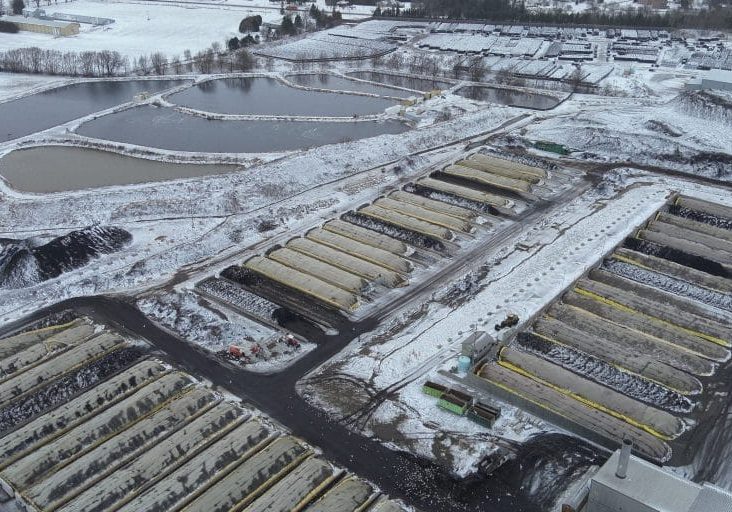
PART 1: COMPOSTING INFRASTRUCTURE DECISIONS THAT HAUNT BUDGETS FOR DECADES
PART 1: COMPOSTING INFRASTRUCTURE DECISIONS THAT HAUNT BUDGETS FOR DECADES Across the globe, a…

Celebrating the Season Without Wasting It
Celebrating the Season Without Wasting It The holiday season brings full tables, festive decor,…
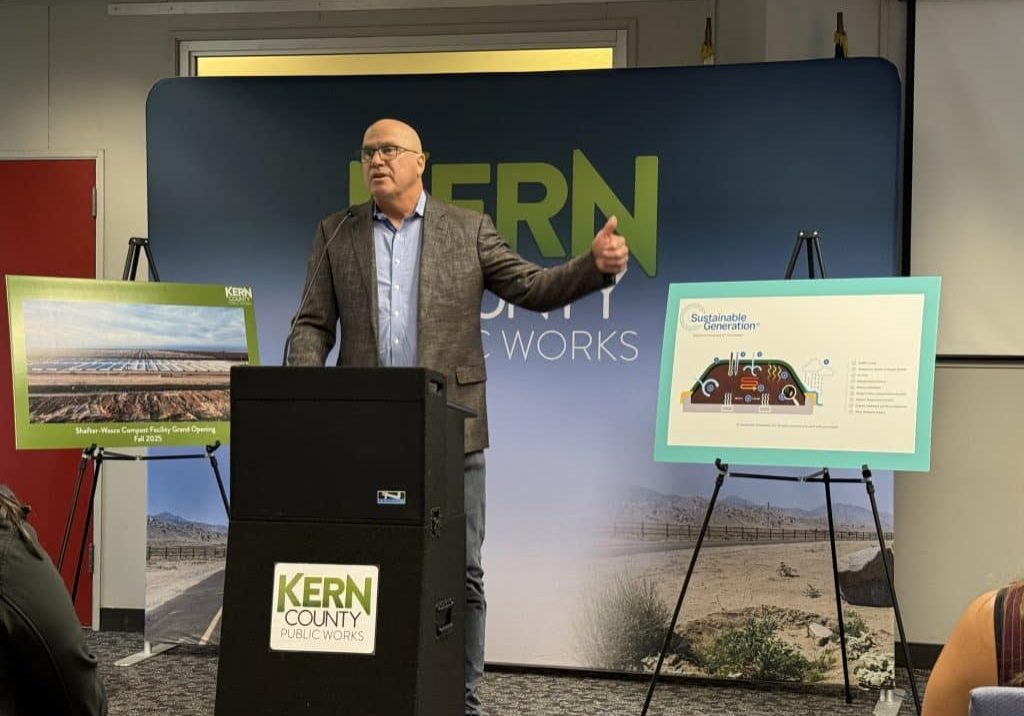
Building a Greener Future Together: Kern County Launches SG-Powered Compost Facility
Sustainable Generation is proud to celebrate the grand opening of the Shafter-Wasco Compost Facility
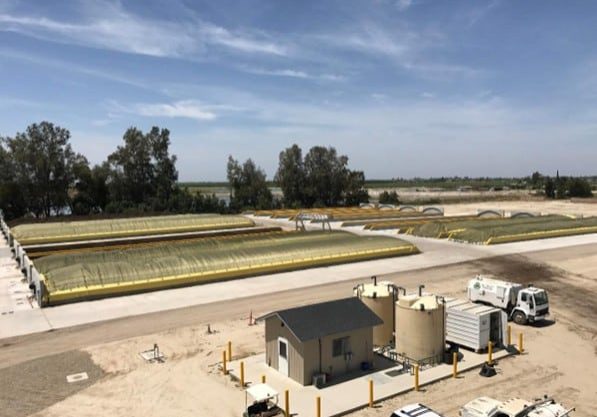
Making Waves, the Membrane Covered ASP Composting Tsunami
ASP composting relies on forced aeration to maintain aerobic conditions and optimize biological activity.
INTERVIEW WITH A BIOSOLIDS EXPERT
Biosolids expert Dan Collins, P.E., shares insights on safe, efficient composting.
Summary of Performance GORE® Cover and Negative ASP
GORE® Cover was evaluated to quantify the performance versus an existing negatively aerated static
Composting Facility Delivers Significant Environmental Protection
The East Coast’s largest food waste composting site processes 57,000 tons of organics annually.

Exceeding Air Quality VOC Emission Regulatory Compliance in California
SG systems consistently meet and exceed California air quality regulations.
Positive ASP Composting: the Future of Organics
Two of the biggest issues faced by commercial composting operators are emissions (odor and
Proven Results: Over 20 Years Reducing Odors and Emissions in California
Sustainable Generation, LLC and the GORE® Cover have a long track record of success.
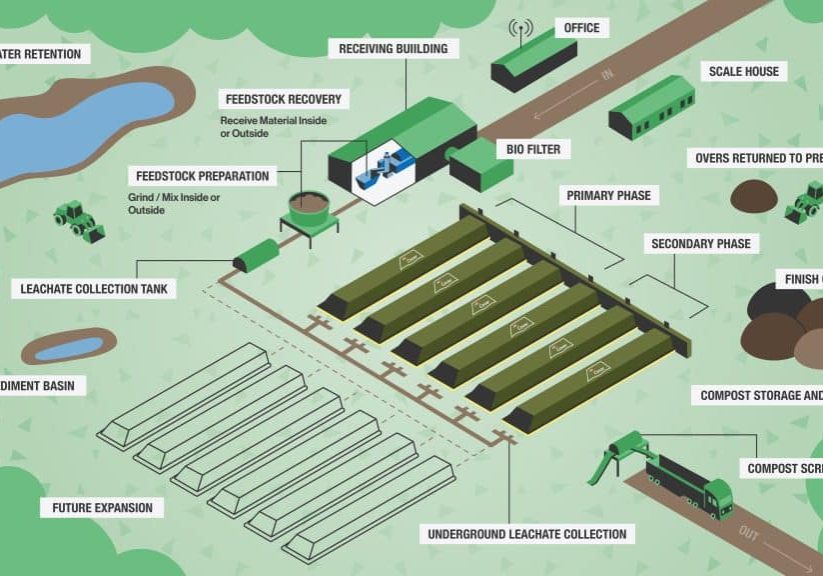
Why Smart Composting Facility Operators Keep Stormwater and Leachate Separate
During heavy storms, composting facilities face increased runoff and leachate.

What our customers are saying…

“The Sustainable Generation® team provided us with outstanding hands-on assistance as we learned to use their system. We retrofit our existing positive air ASP system, which used a compost cap, by upgrading to the SG Mobile® System with GORE® Cover so we could address environmental and community concerns about odors and vector control, and also so we could scale up and expand our composting operation."
Justin Green, Executive Director & Founder Big Reuse

"With disposal and transportation costs increasing with no end in sight, plus an abundance of yard debris from our community, we decided to try biosolids composting at our Wastewater Treatment Plant to reduce our costs and create a Class A product. We went with the SG Mobile® System with GORE® Covers. The ease of operation and the cost savings made this a natural fit. The final product has been a huge hit with the locals who can't get enough Class A compost. We recently doubled the size of our composting operation to keep up with our increasing volumes and demand. This system is easily scalable to meet future demands."
Mike Miller, Public Works Director, City of Florence, Oregon

"We had no composting experience, so conducting a demonstration project with Sustainable Generation® greatly enhanced our understanding of food waste composting and helped us immensely with our subsequent expansion design process. During the selection process, it made a difference that SG's technology was already a proven solution for meeting VOC emission reductions for our San Joaquin Valley Air Pollution Control District."
Jonathan Kalpakoff, VP Mid Valley Disposal
“The Sustainable Generation® team provided us with outstanding hands-on assistance as we learned to use their system. We retrofit our existing positive air ASP system, which used a compost cap, by upgrading to the SG Mobile® System with GORE® Cover so we could address environmental and community concerns about odors and vector control, and also so we could scale up and expand our composting operation."
Justin Green, Executive Director & Founder Big Reuse
"With disposal and transportation costs increasing with no end in sight, plus an abundance of yard debris from our community, we decided to try biosolids composting at our Wastewater Treatment Plant to reduce our costs and create a Class A product. We went with the SG Mobile® System with GORE® Covers. The ease of operation and the cost savings made this a natural fit. The final product has been a huge hit with the locals who can't get enough Class A compost. We recently doubled the size of our composting operation to keep up with our increasing volumes and demand. This system is easily scalable to meet future demands."
Mike Miller, Public Works Director, City of Florence, Oregon
"We had no composting experience, so conducting a demonstration project with Sustainable Generation® greatly enhanced our understanding of food waste composting and helped us immensely with our subsequent expansion design process. During the selection process, it made a difference that SG's technology was already a proven solution for meeting VOC emission reductions for our San Joaquin Valley Air Pollution Control District."